Wet carpet in Clarksville: what to do in the first 48 hours, and what decides whether it can be saved
Clarksville takes about 51 inches of rain a year and its summers are muggy, so a wet floor here does not dry on its own and a wet pad starts to smell within a day or two. What you do in the first hours decides whether the carpet is cleaned and kept or cut out and binned. Here is the order to do it in.
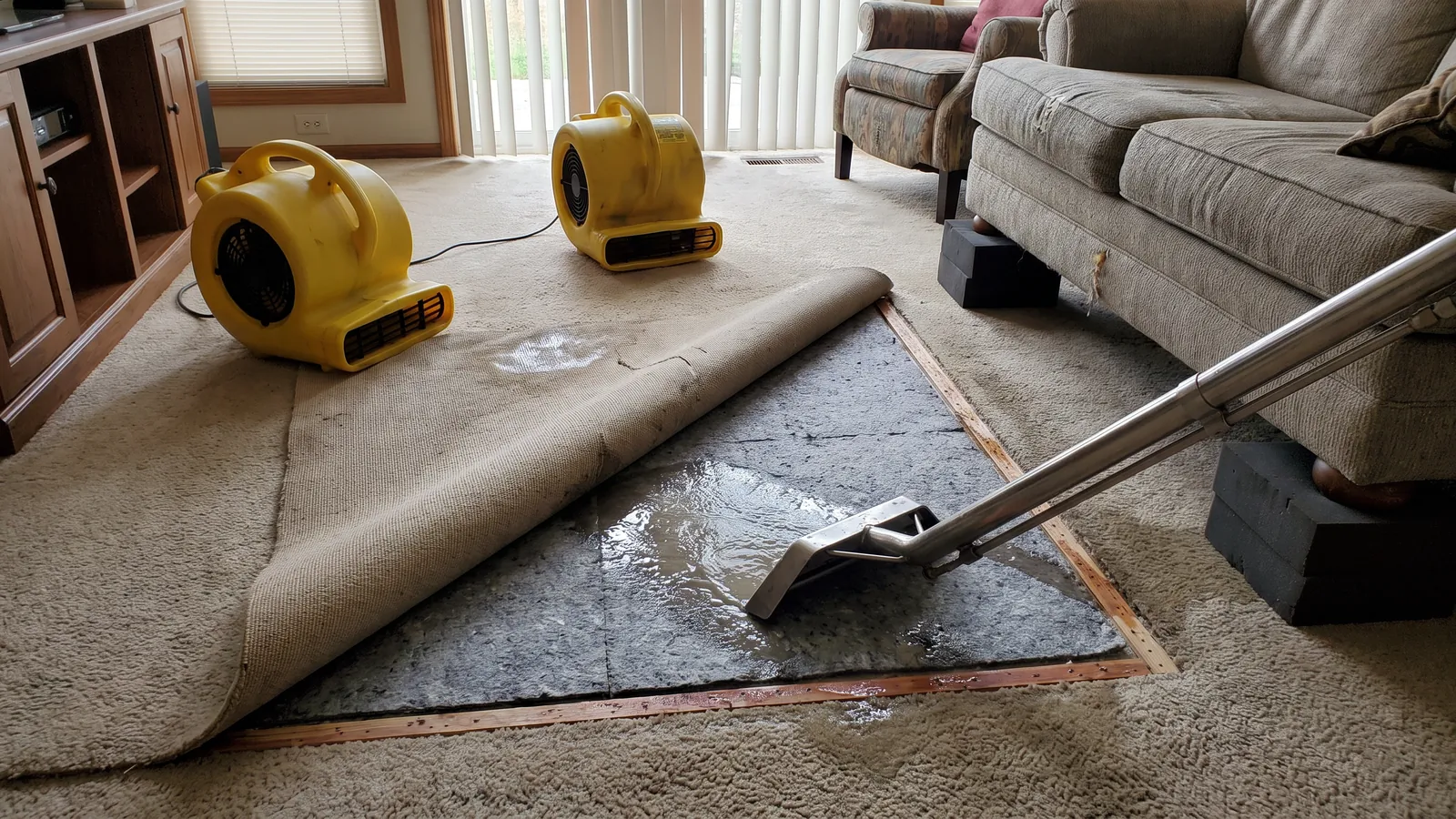
The most common wet-carpet calls we take are not dramatic floods. They are a washing machine hose that split overnight, a water heater in the garage that let go, a toilet that overflowed while nobody was home, a storm that pushed water under a door or up through a drain, and a sliding door that leaked in a downpour. The water spreads under the carpet along the pad long before it shows on top, and by the time the carpet feels wet, the pad is soaked over a bigger area than you think.
In the first hour
- Stop the water. Shut the supply valve, turn off the appliance, switch off the water heater, or block the door. Nothing else matters until the water stops coming.
- Get electricity away from it. Unplug anything on the wet floor if you can do so safely; if water has reached outlets, leave the room and turn off the breaker.
- Protect the furniture. Put foil or plastic under wooden and metal legs, or lift pieces onto blocks. Furniture stain, rust and dye transfer are the second-most common damage after the carpet itself.
- Lift what you can. Rugs, boxes, bags, anything sitting on the carpet. Pull back the carpet from a corner if it is easy; do not try to lift a whole room.
- Call. A soaked room goes to the front of our line, seven days a week. Say the water is still standing if it is.
While you wait
Manage the air. On a dry, cool day, open the windows. On a humid day, which is most of June through September here, keep the house closed and run the air conditioning, because humid outside air will only add moisture. Fans help if you have them; point them across the floor, not down at it. Do not run a rental extractor and assume the job is done; they leave far more water in the pad than they remove. Photograph everything before it is moved if you may be making an insurance claim.
What kind of water decides everything
- Clean water from a supply line, a water heater, rain through a window: the carpet and often the pad can be extracted, dried and kept if the work starts within a day or two.
- Grey water from a washer, dishwasher or tub drain: the carpet can usually be cleaned and dried with treatment; the pad is more often replaced.
- Contaminated water from a sewer backup, a toilet with waste, or a flooded creek: the carpet and pad come out and are bagged for health reasons. No cleaning changes that.
What the job looks like when we arrive
The technician identifies the water, extracts standing water with the truck mount, pulls the carpet back to the pad, meters the moisture, and either dries the pad in place with air movers and a dehumidifier or cuts it out where it is saturated. The carpet is dried, cleaned, deodorised with an antimicrobial, and checked dry with a meter. We provide readings and photos for the insurer. The water damage page has the details and the limits: we dry carpet and pad and clean the subfloor. Wet drywall, cabinets and anything behind the walls is a restoration contractor's work, and mould remediation is a separately regulated trade in Tennessee that we do not do.
After 48 hours
A pad that has been wet for two days in a Clarksville summer has usually started to smell and is cheaper to replace than to fight. The carpet on top can still often be saved if it is clean water. After a week, the odds drop sharply, and a musty smell that has moved into the subfloor or the baseboards is beyond carpet cleaning. Call early; it is the cheapest decision in this whole process.
Questions people ask about this
Can I dry it myself with fans?
Fans help the carpet surface but cannot dry a saturated pad, and a wet pad is where the smell comes from. Fans while you wait, yes; fans instead of extraction, no.
Should I pull the carpet up?
A corner, if it is easy, to get air to the pad. A whole room, no; carpet is heavy when wet, the tack strip is sharp, and re-laying it is part of our job.
The water was from the washing machine. Is it safe?
Washer water is grey water. The carpet can usually be cleaned and dried with treatment; the pad is more often replaced. We identify it on arrival.
Is it covered by insurance?
Sudden plumbing failures often are, less the deductible; slow leaks and rising water often are not. Photograph everything, call your carrier early, and we provide readings and an itemised invoice.
Do you fix the walls too?
No. We dry carpet and pad and clean the subfloor. Wet drywall, baseboards and cabinets are restoration work and we will say when a job has crossed that line.
What about mould?
Mould remediation is regulated separately in Tennessee and we do not do it. If we find growth we stop, tell you, and recommend a remediation contractor.
Related reading: Water damage and carpet drying · Drying time in Clarksville humidity · Carpet cleaning · Paying for it